
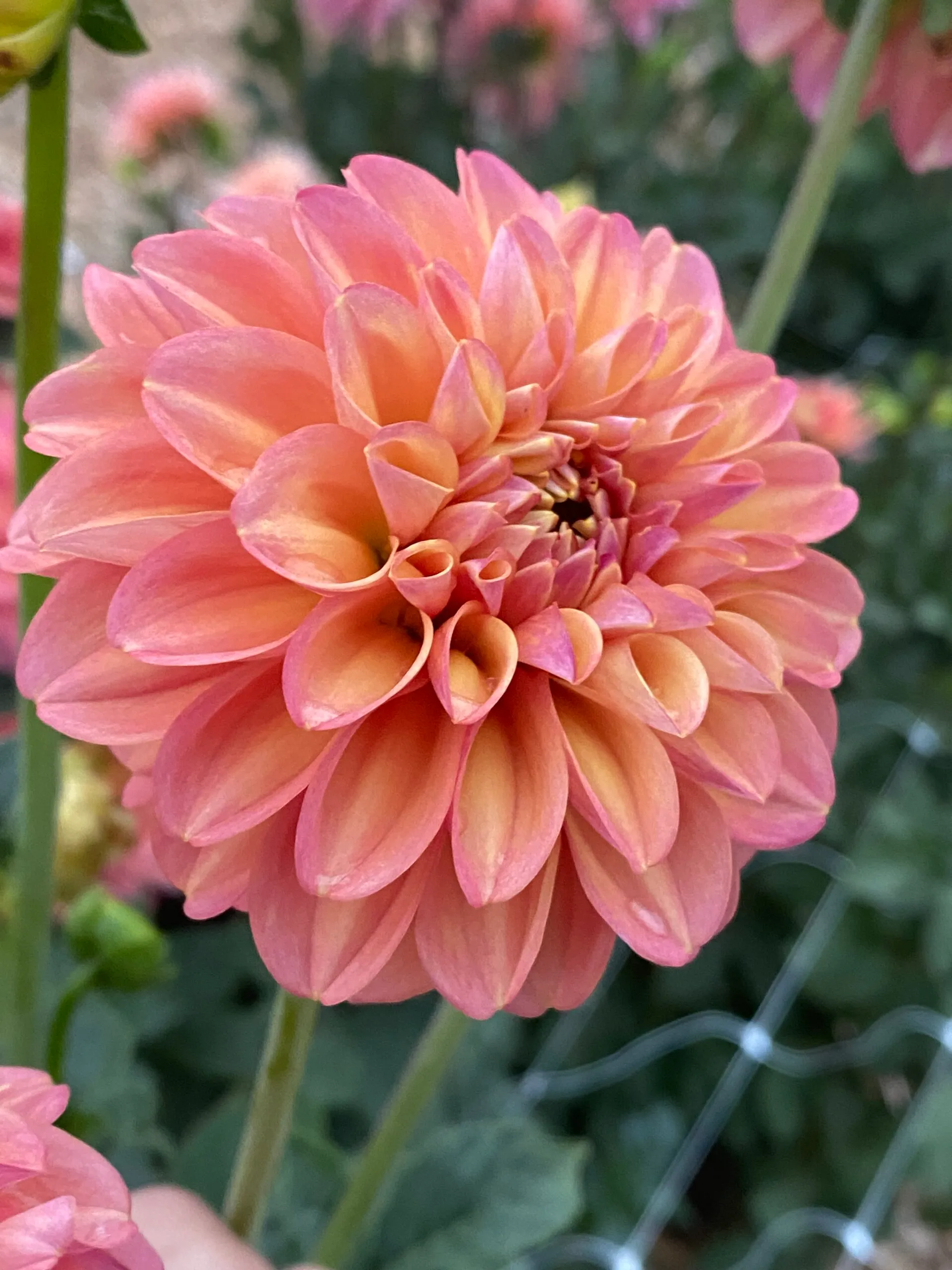
Description
The Dahlia Mille Fleur is a premium cut flower variety loved for its abundant sprays of delicate blooms that resemble a “thousand flowers.” Ideal for weddings, hotel foyers, restaurant spaces, and floral installations, Mille Fleur dahlias bring elegance, texture, and volume to any arrangement. Grown in South Africa, these cut flowers are harvested for freshness, ensuring a vase life of 5–7 days. Whether you’re styling your home, planning an event, or sourcing a florist studio, Dahlia Mille Fleur delivers unmatched charm and floral abundance.
Note: We sell a small tuber clump with 3-5 tubers on it or 2/3 tubers. All clump tubers have eyes (some quite a few), and all tubers, if not in a clump, will have an eye, sometimes two.
Best Times to Grow (South Africa):
- Spring (Sept – Nov): Best time to plant tubers after frost danger has passed.
- Summer (Dec – Feb): Peak growing and flowering season.
- Autumn (Mar – May): Continued blooming until first frosts.
- Winter (Jun – Aug): Tubers should be lifted and stored in frost-prone areas.
Planting Instructions:
-
When to start sowing:
-
Plant tubers in early September – October in frost-free regions.
-
In colder zones, start in pots indoors in late winter and transplant once frost has passed.
-
-
Where to plant:
-
Full sun, minimum 6–8 hours of direct sunlight daily.
-
Well-drained, fertile soil enriched with compost.
-
-
Steps:
-
Dig holes 5–15 cm deep.
-
Lay the tuber horizontally with the eye facing upwards.
-
Cover with soil and water lightly.
-
Stake plants early to support tall growth.
-
Spacing in Beds:
-
45–60 cm apart to allow airflow and prevent mildew.
How High the Plant Grows:
-
0.6 – 1 m tall.
Annual or Perennial?
-
Tender perennial (grown as an annual in frost zones).
-
Your localised climate zone might have an impact on some plants’ life span.
Pinching:
-
Yes, pinch out the main stem at 30 cm height to encourage bushier growth and more blooms.
Extra Planting Guidelines:
-
Mulch to retain soil moisture and reduce weeds.
-
Water deeply twice a week, avoiding wetting foliage to prevent fungal issues.
-
Rotate planting sites annually to reduce soil-borne diseases.
Common Pests & Diseases:
-
Pests: Aphids, red spider mite, thrips, cutworms, slugs.
-
Diseases: Powdery mildew, botrytis, gall, and root rot.
- Powdery Mildew: Common in humid conditions. Manage with proper spacing, avoid overhead watering, and treat with organic sulfur-based fungicides; and KNF/Jadam inputs (ask us to share info).
- Botrytis: Ensure proper draining in soil and treat with organic fungicides if needed.
- Gall: Dig up tubers or plants and discard them by throwing them in a dustbin. Take some of the surrounding soil as well. Sterlise all equipment with a strong bleach and water solution, soak and wash. Don’t plant any dahlias in that spot for at least 3 years.
-
Management:
-
Companion planting with basil, marigolds, and garlic to repel insects.
-
Neem oil or insecticidal soap for organic pest control, or a DIY pest control recipe (as us to share the recipe).
-
Avoid overhead watering to reduce fungal issues.
-
Companion Plants:
Pest Control & Repellent Plants
- Marigolds – Release a scent that deters nematodes, aphids, and thrips. They’re also great trap crops for spider mites.
- Garlic, Onions, and Chives (Alliums) – Repel aphids, thrips, and Japanese beetles; their sulfur compounds also discourage fungal diseases.
- Basil – Repels aphids, whiteflies, and mosquitoes while attracting pollinators.
- Mint – Strong scent deters ants, aphids, and flea beetles (best kept in pots to prevent spreading).
- Thyme & Rosemary – Aromatic herbs that repel whiteflies, aphids, and other sap-suckers.
Pollinator Attractors
- Lavender – Draws bees and butterflies, improving pollination and overall garden biodiversity.
- Zinnias – Attract bees, butterflies, and hoverflies (which also eat aphids).
- Cosmos – Excellent at luring in beneficial insects like lacewings and parasitic wasps.
- Sunflowers – Attract pollinators and act as a “sacrificial plant” for aphids, keeping them off dahlias.
Soil Health & Nutrient Boosters
- Legumes (Bush beans, peas, clover) – Fix nitrogen in the soil, which supports dahlia growth.
- Borage – Improves soil with trace minerals, attracts pollinators, and is believed to strengthen neighbouring plants.
- Comfrey – Deep-rooted accumulator of nutrients like potassium and calcium, enriching compost when cut and dropped as mulch.
Trap Crops (Sacrificial Plants)
- Nasturtiums – Lure aphids, caterpillars, and whiteflies away from dahlias. They also deter cucumber beetles.
- Sunflowers – Can serve as an aphid magnet, pulling pests away from dahlias.
Ground Cover & Microclimate Helpers
- Creeping Thyme – Works as a fragrant ground cover, suppresses weeds, and attracts pollinators.
- Chamomile – Low-growing, enhances soil health, and repels certain insects.
- Cilantro (Coriander) – Attracts beneficial insects like hoverflies and lacewings.
Aesthetic Companions (Visual Balance & Texture)
- Salvia & Verbena – Contrast beautifully with dahlias and draw pollinators.
- Ammi majus (False Queen Anne’s Lace) – Adds airy, lacy texture that highlights the boldness of dahlias.
- Snapdragons – Upright form complements the rounded dahlia blooms.
- Amaranthus – Contrast colour and shapes.
- Cosmos – Height and whimsical texture, and beneficial wasps.
- Zinnia’s – Visual interest and colour
Quick Tip:
- Plant pest-repelling herbs (like garlic or chives) in between or at the edges of your dahlia beds.
- Use trap crops (nasturtiums, sunflowers) a little away from your main dahlia patch.
- Ground covers (creeping thyme, chamomile) can be planted under dahlias to suppress weeds and keep soil cool.
Care & Handling:
-
Fertilising (Organic Options):
-
Apply liquid seaweed or compost tea every 2–3 weeks during growth.
-
Bone meal at the planting stage to boost root and tuber development.
- Use a balanced organic fertiliser, such as 3:1:5 or compost tea. Apply every 3-4 weeks during the growing season.
- Avoid nitrogen-heavy fertilisers later in the season to prevent excessive leaf growth over blooms.
-
Harvesting & Vase Life:
-
When to harvest:
-
Cut flowers when ¾ open, preferably in the early morning.
-
-
Cutting tips:
-
Use sharp, clean secateurs.
-
Cut stems at an angle and immediately place them in water.
-
-
Vase Life:
-
5–7 days with proper care.
-
-
Prolonging vase life:
-
Change water daily, recut stems every 2 days.
-
Keep away from direct sunlight and fruit bowls (ethylene gas shortens life).
-


Reviews
There are no reviews yet.