
Description
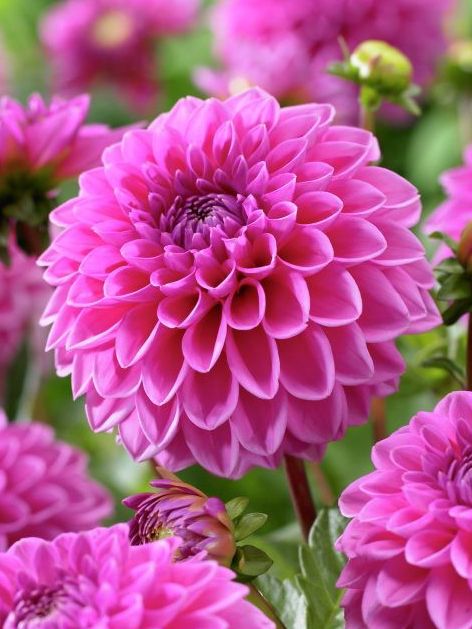
Dahlia “Sandra” (also known as “Pink Sylvia”) is a stunning ball-type dahlia featuring perfectly round, tightly petalled blooms of bubble-gum to rose-pink with delicate lighter tips that give a soft frosted edge. Plants reach around 1.2-1.5 m high, boasting long, sturdy stems ideal for cutting. Blooming from summer into autumn (approximately December through to April/May in South Africa), “Sandra” performs best in full sun and well-drained soil. Its plentiful, formal blooms make it prized for cut flower arrangements, wedding bouquets, garden borders, and designer displays. Tubers should be planted in spring once the soil warms; mulch and organic feed help yield abundant, healthy flowers. With frequent deadheading, proper support, and clean harvesting, the vase life is excellent (5-8 days+).
Note, we sell a small tuber clump with 3-5 tubers on it or 2/3 tubers. All clump tubers have eyes (some quite a few), and all tubers, if not in a clump, will have an eye, sometimes two.
Best Times to Grow (South Africa):
- Spring (Sept – Nov): Best time to plant tubers after frost danger has passed.
- Summer (Dec – Feb): Peak growing and flowering season.
- Autumn (Mar – May): Continued blooming until first frosts.
- Winter (Jun – Aug): Tubers should be lifted and stored in frost-prone areas.
Planting Instructions:
-
When to start sowing:
-
Plant tubers in early September – October in frost-free regions.
-
In colder zones, start in pots indoors in late winter and transplant once frost has passed.
-
-
Where to plant:
-
Full sun, minimum 6–8 hours of direct sunlight daily.
-
Well-drained, fertile soil enriched with compost.
-
-
Steps:
-
Dig holes 5–15 cm deep.
-
Lay the tuber horizontally with the eye facing upwards.
-
Cover with soil and water lightly.
-
Stake plants early to support tall growth.
-
Spacing in Beds:
-
45–60 cm apart to allow airflow and prevent mildew.
How High the Plant Grows:
-
1.2 – 1.5 m tall.
Annual or Perennial?
-
Tender perennial (grown as an annual in frost zones).
-
Your localised climate zone might have an impact on some plants’ life span.
Pinching:
-
Yes, pinch out the main stem at 30 cm height to encourage bushier growth and more blooms.
Extra Planting Guidelines:
-
Mulch to retain soil moisture and reduce weeds.
-
Water deeply twice a week, avoiding wetting foliage to prevent fungal issues.
-
Rotate planting sites annually to reduce soil-borne diseases.
Common Pests & Diseases:
-
Pests: Aphids, red spider mite, thrips, cutworms, slugs.
-
Diseases: Powdery mildew, botrytis, gall, and root rot.
- Powdery Mildew: Common in humid conditions. Manage with proper spacing, avoid overhead watering, and treat with organic sulfur-based fungicides; and KNF/Jadam inputs (ask us to share info).
- Botrytis: Ensure proper draining in soil and treat with organic fungicides if needed.
- Gall: Dig up tubers or plants and discard them by throwing them in a dustbin. Take some of the surrounding soil as well. Sterlise all equipment with a strong bleach and water solution, soak and wash. Don’t plant any dahlias in that spot for at least 3 years.
-
Management:
-
Companion planting with basil, marigolds, and garlic to repel insects.
-
Neem oil or insecticidal soap for organic pest control, or a DIY pest control recipe (as us to share the recipe).
-
Avoid overhead watering to reduce fungal issues.
-
Companion Plants:
Pest Control & Repellent Plants
- Marigolds – Release a scent that deters nematodes, aphids, and thrips. They’re also great trap crops for spider mites.
- Garlic, Onions, and Chives (Alliums) – Repel aphids, thrips, and Japanese beetles; their sulfur compounds also discourage fungal diseases.
- Basil – Repels aphids, whiteflies, and mosquitoes while attracting pollinators.
- Mint – Strong scent deters ants, aphids, and flea beetles (best kept in pots to prevent spreading).
- Thyme & Rosemary – Aromatic herbs that repel whiteflies, aphids, and other sap-suckers.
Pollinator Attractors
- Lavender – Draws bees and butterflies, improving pollination and overall garden biodiversity.
- Zinnias – Attract bees, butterflies, and hoverflies (which also eat aphids).
- Cosmos – Excellent at luring in beneficial insects like lacewings and parasitic wasps.
- Sunflowers – Attract pollinators and act as a “sacrificial plant” for aphids, keeping them off dahlias.
Soil Health & Nutrient Boosters
- Legumes (Bush beans, peas, clover) – Fix nitrogen in the soil, which supports dahlia growth.
- Borage – Improves soil with trace minerals, attracts pollinators, and is believed to strengthen neighbouring plants.
- Comfrey – Deep-rooted accumulator of nutrients like potassium and calcium, enriching compost when cut and dropped as mulch.
Trap Crops (Sacrificial Plants)
- Nasturtiums – Lure aphids, caterpillars, and whiteflies away from dahlias. They also deter cucumber beetles.
- Sunflowers – Can serve as an aphid magnet, pulling pests away from dahlias.
Ground Cover & Microclimate Helpers
- Creeping Thyme – Works as a fragrant ground cover, suppresses weeds, and attracts pollinators.
- Chamomile – Low-growing, enhances soil health, and repels certain insects.
- Cilantro (Coriander) – Attracts beneficial insects like hoverflies and lacewings.
Aesthetic Companions (Visual Balance & Texture)
- Salvia & Verbena – Contrast beautifully with dahlias and draw pollinators.
- Ammi majus (False Queen Anne’s Lace) – Adds airy, lacy texture that highlights the boldness of dahlias.
- Snapdragons – Upright form complements the rounded dahlia blooms.
- Amaranthus – Contrast colour and shapes.
- Cosmos – Height and whimsical texture, and beneficial wasps.
- Zinnia’s – Visual interest and colour
Quick Tip:
- Plant pest-repelling herbs (like garlic or chives) in between or at the edges of your dahlia beds.
- Use trap crops (nasturtiums, sunflowers) a little away from your main dahlia patch.
- Ground covers (creeping thyme, chamomile) can be planted under dahlias to suppress weeds and keep soil cool.
Care & Handling:
-
Fertilising (Organic Options):
-
Apply liquid seaweed or compost tea every 2–3 weeks during growth.
-
Bone meal at the planting stage to boost root and tuber development.
- Use a balanced organic fertiliser, such as 3:1:5 or compost tea. Apply every 3-4 weeks during the growing season.
- Avoid nitrogen-heavy fertilisers later in the season to prevent excessive leaf growth over blooms.
-
Harvesting & Vase Life:
-
When to harvest:
-
Cut flowers when ¾ open, preferably in the early morning.
-
-
Cutting tips:
-
Use sharp, clean secateurs.
-
Cut stems at an angle and immediately place in water.
-
-
Vase Life:
-
5–7 days with proper care.
-
-
Prolonging vase life:
-
Change water daily, recut stems every 2 days.
-
Keep away from direct sunlight and fruit bowls (ethylene gas shortens life).
-


Reviews
There are no reviews yet.