
Common Pests:
| Aphids:
|
These pests feed on plant sap, causing damage to foliage and blooms.
Control: Spray with water to dislodge them or use insecticidal soap or neem oil to control heavier infestations. |
| Thrips:
|
Small, cigar-shaped insects that feed on blooms, causing streaking and potentially transmitting viruses.
Control: Introduce beneficial insects like lacewings and ladybugs or use insecticidal soap. |
| Spider mites:
|
Tiny spider-like pests that feed on the undersides of leaves. Control: Predatory Mites, ladybugs, lacewings, Gall Midges. |
By planting any of the companion plants listed in the list to follow below you will attract these beneficial insects
Common Diseases:
| Leaf spot:
|
Fungal caused by overwatering and poor drainage, can kill the plant. |
| Powdery mildew: | A fungal disease that leaves a white powdery coating on leaves. |
Prevention and Management:
| Regular Inspection: | Monitor plants for early signs of pests and diseases. |
| Good Hygiene: | Remove dead or infected plant debris and ensure proper spacing for airflow. |
| Natural Predators: | Encourage beneficial insects like ladybugs and lacewings to control pest populations. |
| Cultural Practices: | Nature works in harmony make sure you follow the same principle in your garden by planting a variety of plants, herbs, etc.
Make sure to start with organic principles in restoration and soil care and maintenance.
Interplant with companion plants (listed below).
Rotate crops, improve drainage, and avoid overcrowding to minimize disease risks. |
Companion Plants and Herbs:
- Lavender: Provides a nice colour contrast with its purple flowers attract beneficial insects.
- Yarrow: Feathery foliage and flat-topped flower clusters attract beneficial insects.
- Echinacea: Bold purple coneflowers attract beneficial insects.
- Coreopsis (Tick Weed): Bright yellow daisy-like flowers attract beneficial insects.
- Marigolds: While not a herb, marigolds are excellent companions as they deter nematodes and other pests.
- Nasturtiums: Attract beneficial insects like ladybugs and lacewings
- Borage: Improves soil quality and attracts pollinators
- Chamomile: Improves plant growth and flavour when grown nearby
- Chives: Chives can help repel aphids and other pests while enriching the soil with their nutrient content.
- Thyme: This herb can attract beneficial insects and improve soil health.
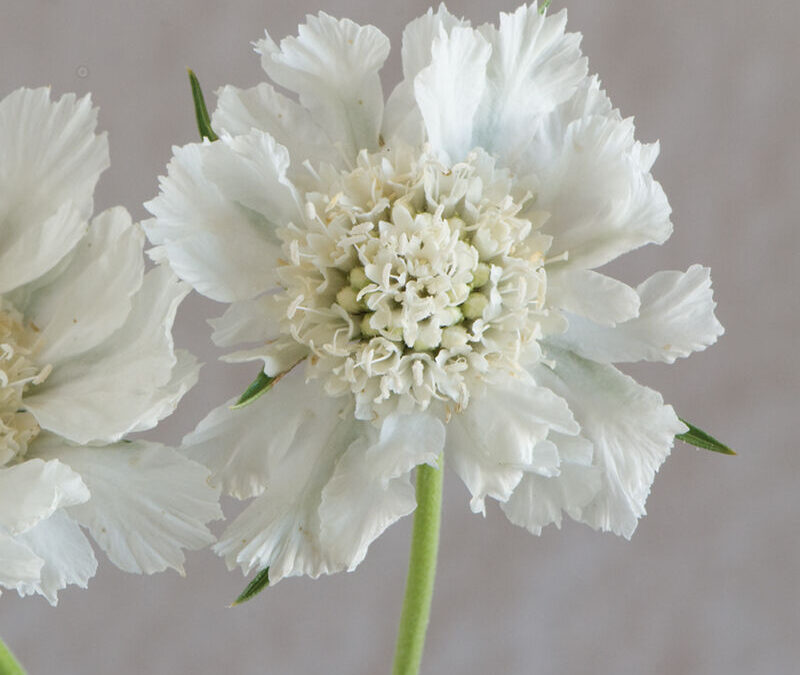
Planting Scabiosa with these companion plants can help deter pests, attract beneficial insects, and create a visually appealing and healthy garden environment. The diversity of plants also helps enrich the soil.