
Common Pests:
| Aphids: | These tiny, soft-bodied insects suck sap from the plants, leading to curled, yellowed, or distorted leaves. They can also excrete a sticky substance that attracts other pests. |
| Spider Mites: | These minuscule, spider-like pests cause stippling or a dusty appearance on leaves. Severe infestations can result in yellowing or reddening of leaves and may produce fine webbing. |
| Slugs and Snails: | Known for chewing irregular holes in leaves, these pests are most active during damp conditions, typically at night. |
| Leaf Miners: | The larvae of certain moths and flies tunnel inside leaves, creating winding trails or blotches. |
| Cutworms: | These caterpillars can damage young plants by cutting them off at the soil level. |
Common Diseases:
| Powdery Mildew: | A fungal disease that appears as a white powdery coating on leaves, often due to high humidity and poor air circulation. |
| Blight: | This disease causes wilting and stem rot. |
Prevention and Management:
| Regular Inspection: | Monitor plants for early signs of pests and diseases. |
| Good Hygiene: | Remove dead or infected plant debris and ensure proper spacing for airflow. |
| Natural Predators: | Encourage beneficial insects like ladybugs and lacewings to control pest populations. |
| Cultural Practices: | Nature works in harmony make sure you follow the same principle in your garden by planting a variety of plants, herbs, etc.
Make sure to start with organic principles in restoration and soil care and maintenance.
Interplant with companion plants (listed below).
Rotate crops, improve drainage, and avoid overcrowding to minimize disease risks. |
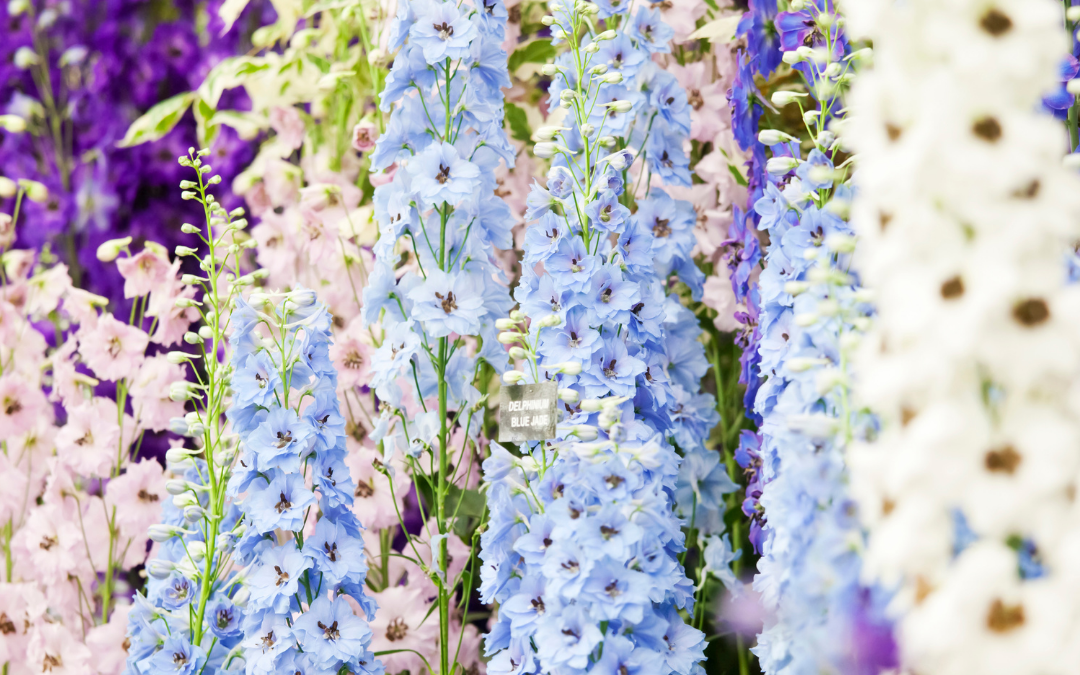
With proper care and attention, your delphiniums will reward you with stunning displays of colourful blooms for years to come!
Companion Plants and Herbs:
- Peonies: Their lush foliage and large blooms complement the tall spikes of delphiniums beautifully.
- Chrysanthemums: These provide a vibrant contrast in colour and help fill out the garden space as delphiniums fade.
- Asters: Their late-season blooms can extend the flowering period in your garden, pairing nicely with delphiniums.
- Iris: The sword-like leaves and elegant blooms of irises create a striking visual alongside delphiniums.
- Daylilies: Their robust nature and diverse colours make them great companions that can thrive in similar conditions.
- Allium: The globe-shaped flower heads add a unique shape and texture that contrasts well with the vertical spikes of delphiniums.
- Roses: Tall roses can provide support and a romantic backdrop for the delicate flowers of delphiniums.
- Blazing Star (Liatris): This plant’s spiky blooms harmonize with delphiniums, creating a unified vertical garden design.
- Achillea (Yarrow): Its flat-topped flowers and fern-like foliage can enhance the garden’s texture and colour palette. Attracts ladybugs and lacewings, which prey on aphids and other pests.
- Geranium: These low-growing plants can help cover the base of delphiniums, providing a lush ground cover.
- Marigolds: Known for deterring nematodes and attracting pollinators, they can help protect delphiniums from pests.
- Borage: Attracts bees and other beneficial insects while improving soil health.
- Nasturtiums: These can act as a trap crop for aphids, drawing them away from delphiniums.
- Lavender: Attracts pollinators and predatory insects while providing a lovely scent.
- Cosmos: These flowers attract a variety of beneficial insects, including hoverflies and bees.
- Bee Balm: Known for drawing bees, butterflies, and hummingbirds, enhancing biodiversity in your garden.
- Dill: Attracts beneficial insects like parasitic wasps, which help control pest populations.
- Fennel: Similar to dill, it attracts predatory insects and can provide a habitat for them.
- Chives: Their flowers attract pollinators and can deter some pests.
- Thyme: Attracts beneficial insects and can serve as a ground cover to suppress weeds.
- Chamomile: Known for attracting beneficial insects and improving the health of nearby plants.
These companions not only enhance the aesthetic appeal of your garden but also can provide mutual benefits, such as pest resistance and improved pollinator attraction. By incorporating these companion plants and herbs into your garden with Delphiniums, you can create a thriving ecosystem that supports beneficial insects, enhances pollination, and helps manage pests naturally.
Immediately After Harvesting:
| Cut at the right time: | The afternoon before you harvest water deeply, this hydrates the plant and blooms.
Always harvest early in the morning or late in the afternoon when it is cool, never in the warmest parts of the day.
Choose stems with most flowers open but some still in the bud. Harvest when the first 25- 35% of the bottom florets are open. |
| Clean cut: | Use sharp, clean scissors or shears to make a diagonal cut, allowing for maximum water uptake. |
| Remove lower leaves: | Strip any leaves that will be below the waterline in the vase to prevent rot as bacteria is your bloom’s biggest enemy when it comes to longevity |
Preparing the Vase and Water:
| Clean vase: | Use a clean vase to avoid bacterial contamination. |
| Freshwater: | Fill the vase with lukewarm water. |
| Flower food: | Add flower food to the water to nourish the blooms and inhibit bacterial growth. |
Ongoing Care:
| Recut Stems: | Every few days, recut the stems at an angle. |
| Water Change: | Change the water when you recut the stems and add flower food again. |
| Deadhead: | Deadhead: Remove any wilted flowers to encourage the remaining buds to open. |
| Keep cool: | Place the vase in a cool location away from direct sunlight, heat sources, draughts, and ripening fruit (ethylene gas can cause wilting). |
| Expected vase Life: | If all of these steps are followed your blooms could last anywhere from 7-12 days in a vase. |